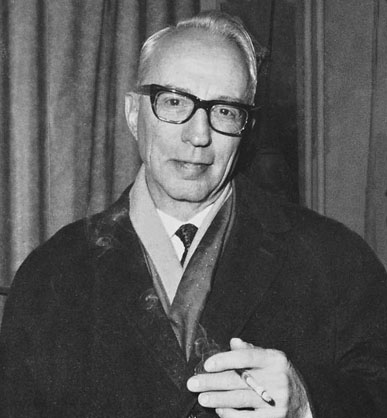
Julius David Berger was born in 1906 in Denver Colorado. He was the youngest of five children. His Jewish father, Adolph Berger, was a saloon keeper, who had emigrated from Zboro, Hungary, in 1882. His Jewish mother, Sophie "Sonya" Berger, emigrated from Russia in 1888. The family lived at 958 Corona Street.
The artist's father had first been married to Ida Levy, who was born in Germany in 1869. They married in 1897 but she died in 1899 after the birth of their second child. In 1902 Adolph Berger married his second wife Sophie "Sonya" Berger. She gave birth to Josef in 1903, Rae in 1904, and Julius David in 1906.
By 1919 his father was a prosperous merchant, who owned a liquor store and a men's furnishing store.
In 1920 Julius David Berger began to study art classes in Denver, while his older brother Josef moved to Kansas City to attend college at the University of Missouri School of Journalism.
In 1921 his older sister married.
In 1922 Adolph Berger retired from business and moved with his wife and son to New York City, where he had previously lived for nine years (1882 to 1891) before moving to Colorado. They lived in an apartment building at 195 Claremont Avenue, on the Upper West Side, one block away from Grant's Tomb and Riverside Church. They were later joined by their eldest son Josef Berger, as soon as he finished his studies.
In September 1923 Julius David Berger enrolled in the three-year certificate program at Pratt Institute School of Art in Brooklyn. His teachers were Dean Cornwell and H. Winfield Scott. His classmates included his lifelong friend, Walter Baumhofer.
In 1926 he graduated from Pratt, where he had joined the swimming team and excelled in chemistry of pigments and dyes.
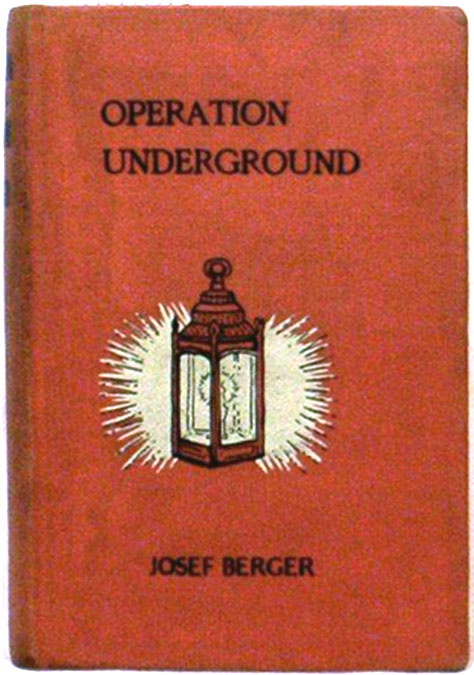
In 1929 Josef Berger's first book was published, Captain Bib, a children's book about a train. It is worth noting that "Bib" was David Berger's family nickname, and signed many of his early illustrations "Bib." The significance of this name is no longer known to his surviving family members.
By 1930, at the age of twenty-four, he had opened an art studio at 982 East 165th Street and begun to work under the name "David Berger" for a New York newspaper, where his older brother was employed as a journalist.
In 1930 his father died in a tragic elevator accident in his apartment building.
David Berger's first freelance assignments were book covers and interior pen & ink illustrations for books published in New York, such as Thirteen Women in 1932 and The Mystery of the Fiddling Cracksman in 1934.
In 1934 he began to study with Harvey Dunn at the Grand Central School of Art, on the top floor of the Grand Central terminal on East 42nd Street.
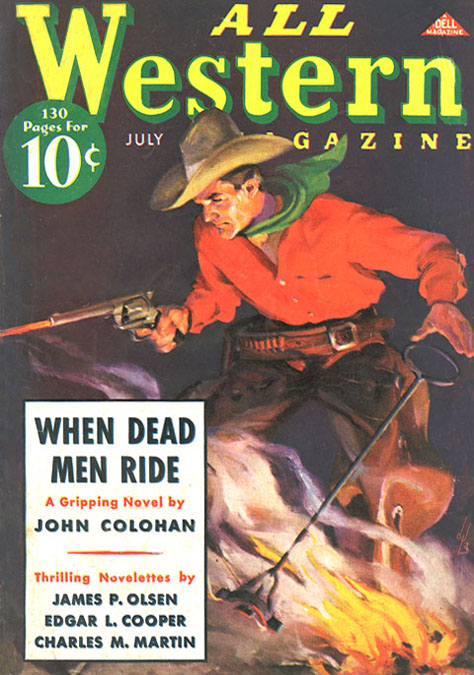
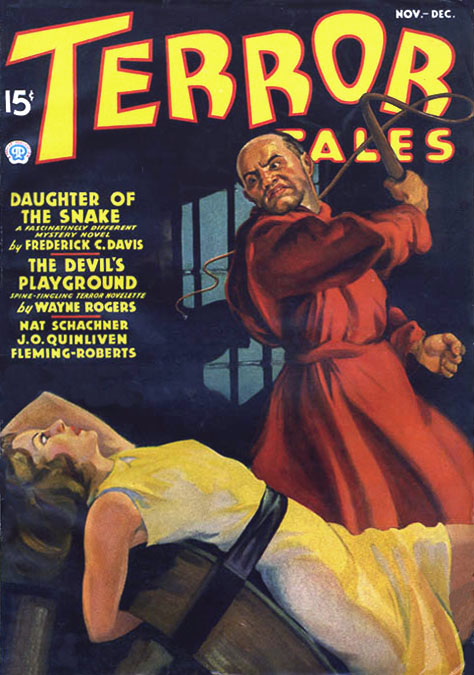
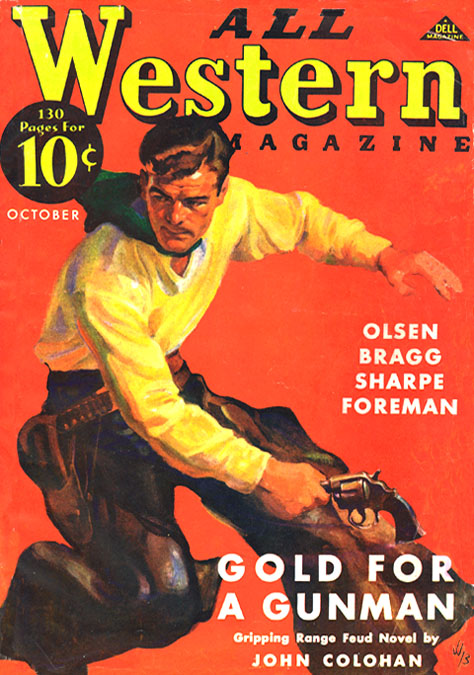
From 1935 to 1940 he drew interior story illustrations for pulps and painted covers for Adventure, All Western, Terror Tales, Argosy, Short Stories, Star Western, 10-Story Western, and Western Story.
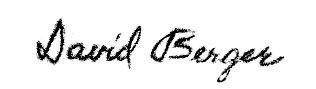
At that time the artist adopted an impressive signature that combined his initials "DB" in one unbroken line of cursive script. Curiously, this signature is often been misread by collectors as spelling "WB" and attributed to Walter Baumhofer.
In 1939 he married his first wife, Frances Berger. They had no children. They moved to 4 Peter Cooper Road, which is east of First Avenue on 22nd Street.
In 1940 he joined an artist agency and began to sell freelance illustrations to slick magazines, such as Colliers, Esquire, Liberty, The Saturday Evening Post, and Woman's Day.
On February 5, 1943 at the time of his draft induction he was recorded to be 5'-8" and weigh 146 pounds. He served in the U.S. Army Engineer Corps during WWII and saw action at the Battle of the Bulge. He became an artist and reporter for the Continental Edition of YANK magazine, which was published in Paris.
After the war he divorced and remained in Paris to study at L'Acadamie de Grand Chaumier, and to work as an illustrator for Marie-Claire magazine.
In the 1950s he returned to New York City and worked for men's adventure magazines, such as Argosy, For Men Only, and True.
In 1960 he returned to live in Paris, where he married his second wife, Martha Fournier. According to Walter Baumhofer in a letter written to Norman Saunders in 1980, "Dave Berger always had a knack of landing on his feet. He's living in Paris, with a little house in the country. He married a gal whose family owns a business that prints labels for the boxes of all the greatest haut couturier fashion design houses in Paris. We correspond quite regularly, Christmas cards and long letters. I saw him once a few years back in Shelter Island. He was marvelously funny as usual, clad in an old fashioned black bathing suit, completely white haired."
The summer home referred to was owned by his older brother, Josef Berger, who had become a renowned author and was a regular contributor to The NY Times.
According to his family oral history, David Berger died in Paris at the age of seventy-seven sometime in 1983.
© David Saunders 2009 |