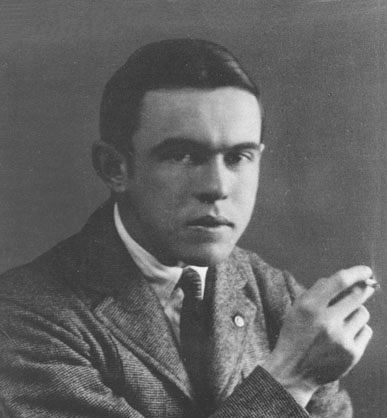
Newton Henry Alfred was born February 20, 1900 in Attleboro, Massachusetts. His father, Edmund Pendleton Alfred, was born 1869 in MA. His mother, Minnie Laura Coldwell, was born 1868 in Newtonville, Nova Scotia, Canada. He was named after his mother's hometown. His parents married in 1890 and had three children, of which he was the youngest. His older sisters Ellen Harriet Alfred and Amy Maude Alfred were born in 1892 and 1897. The Alfred family lived at 31 Third Street in Attleboro. They attended the Parish Pilgrim Church. His father was a foreman at a jewelry factory that employed many townsfolk. In fact, the industry was so prominent at the time that Attleboro was known as "The Jewelry Capital of the World."
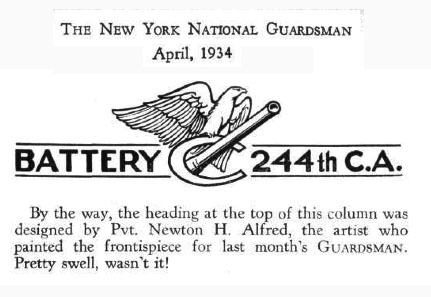
In 1918 he served in the military during the Great War. His name was published in the January 16, 1919 edition of The Christian Register on an honor roll of young Attleboro parishioners in uniform. He was a private in Battery C of the 244th Coast Artillery. He was stationed in Augusta, Georgia. In January 1920 he was honorably discharged at the rank of Paymaster Sergeant.
After the war he returned to Attleboro, MA, and studied art at the Rhode Island School of Design in Providence, RI. He lived at home and commuted to school, which was only a short distance away by local rail service.
By 1923 he had finished art training and begun to earn income drawing line art for local newspaper advertising.
On September 10, 1925 he married Frances Beatrice Shaw. She was born October 4, 1904 in Attleboro, MA. She worked as an ecclesiastic secretary in New York City.
On August 15, 1928 his mother died at the age of sixty in Attleboro, MA.
That same year, he and his wife moved to NYC, where he began to work as an illustrator in the field of advertising. They lived at 126 West 104th Street, near Columbus Avenue. He joined the New York National Guard.
In 1929 he began to study with Frank Dumond (1865-1951) at the Art Students League of New York at 215 West 57th Street.
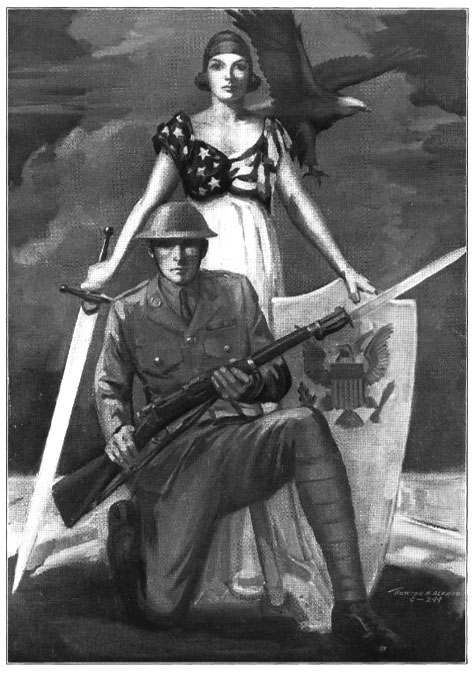
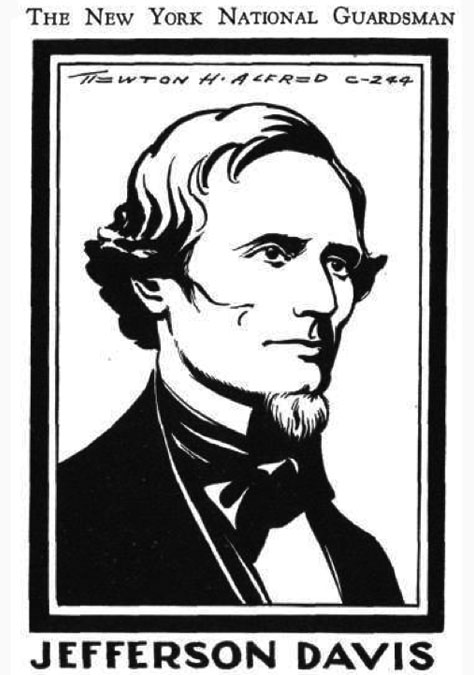
By 1932 the Great Depression had devastated the advertising industry. By 1933 he and his wife were expecting a baby, so he needed to find a new source of income. He began to draw story illustrations for magazines, such as The National Guardsman Magazine.
According to a biographical profile in The Guardsman Magazine, his hobby was the study of the American Civil War. He was fascinated with this subject since early childhood, when he listened to war stories of his grandfather, George Herbert Alfred (1836-1911), a Civil War veteran, who lost the index finger on his left hand during the second battle of Bull Run. This interest in the Civil War was further inspired by his own military service in the Southern State of Georgia during the Great War.
On December 17, 1933 his daughter Harriet Alfred was born in Wadsworth Memorial Hospital in Manhattan. She was named after his maternal grandmother, Harriet N. Bailey.
Six months later on June 12, 1934 his wife, Frances B. Alfred, died of septicemia (blood poisoning) at the age of twenty-nine.
The widowed artist and his infant daughter moved to a more affordable apartment at 242 East 79th Street.
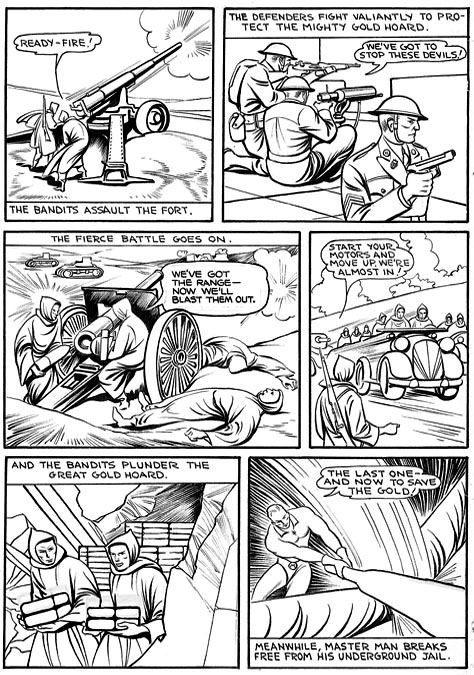
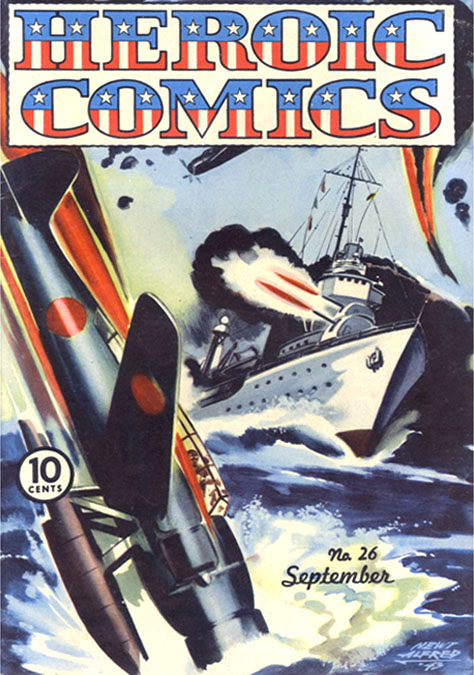
In 1939 he began to draw comic books for Chesler Studio. He went on to draw comic books for Dell Publications, Fawcett Comics, Lev Gleason, Marvel Comics, and Street & Smith Comics.
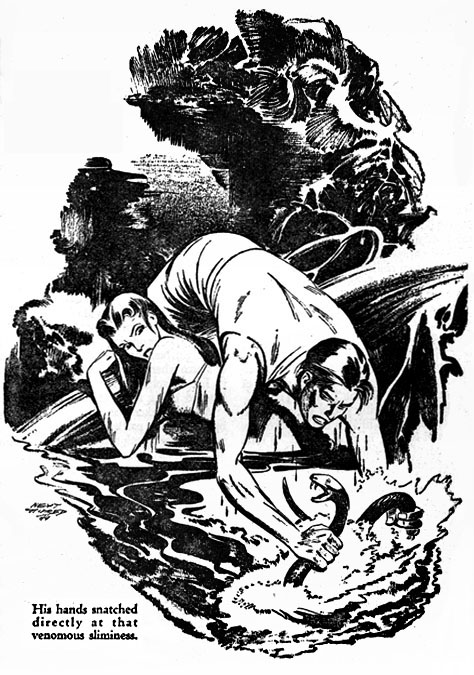
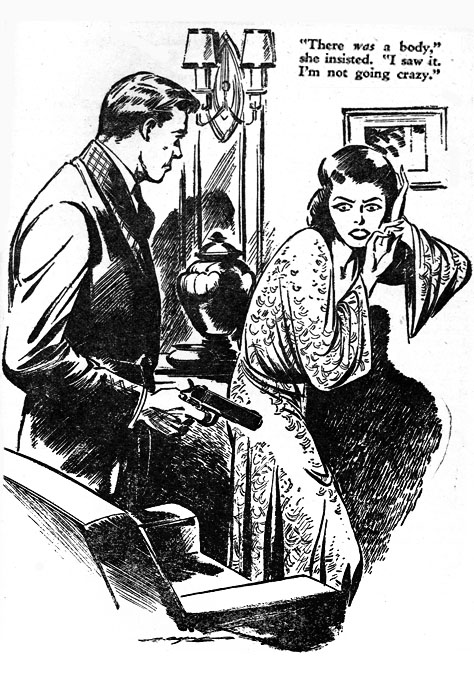
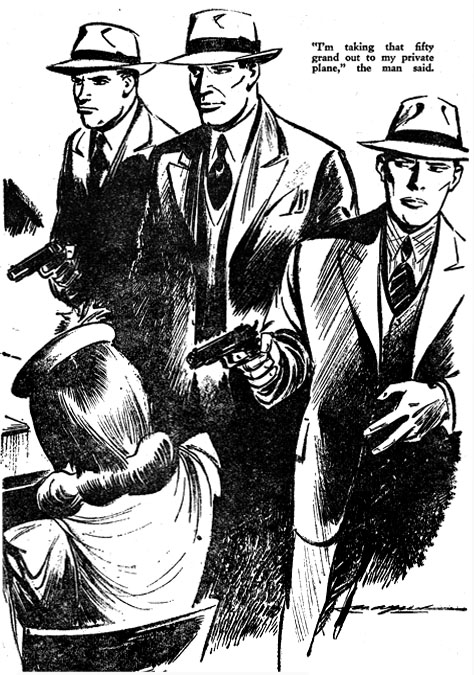
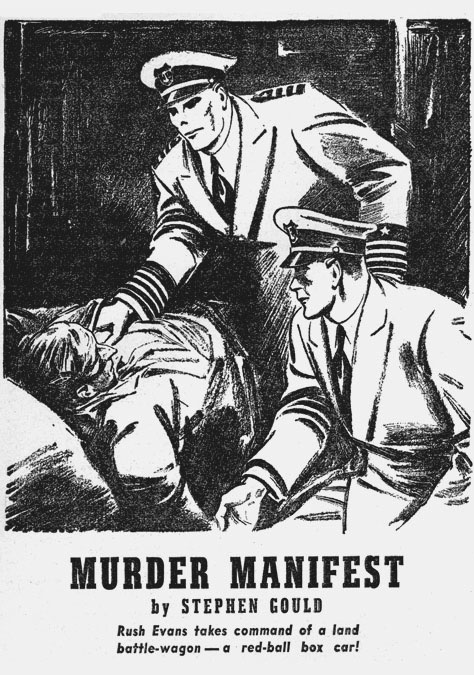
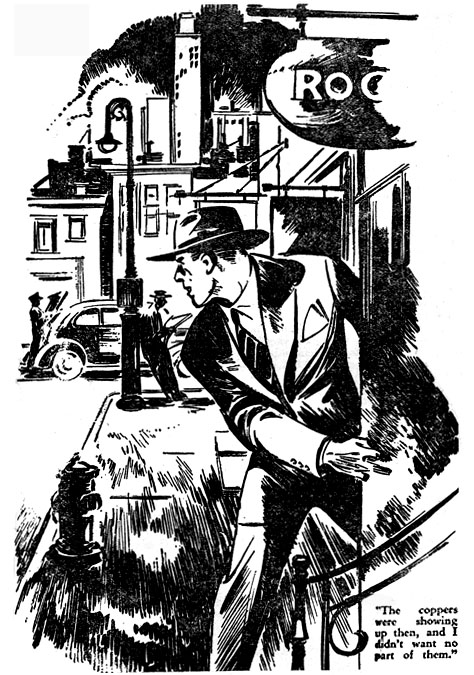
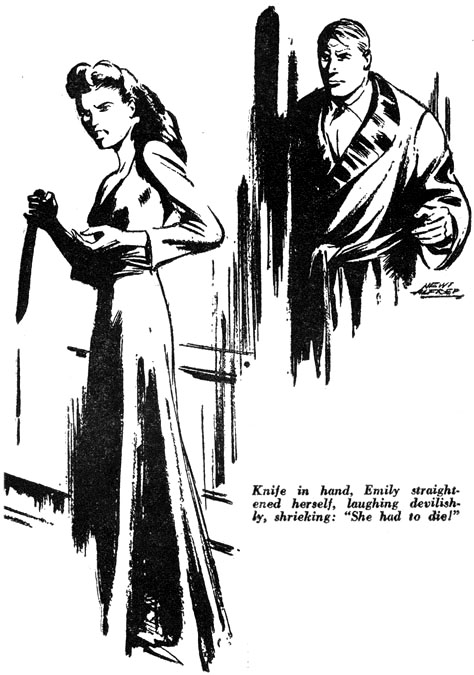
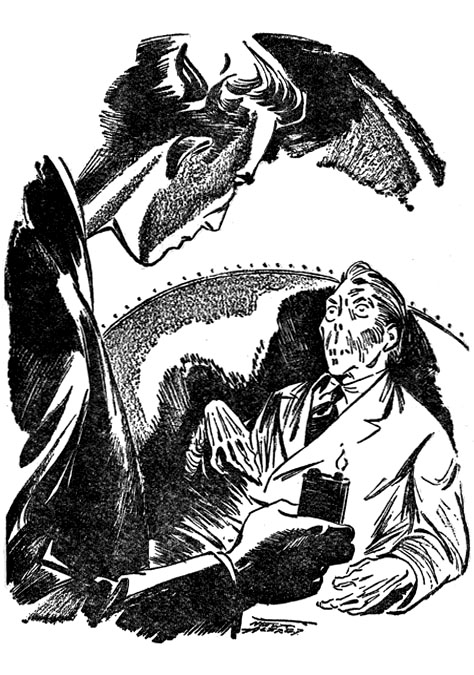
In 1940 he began to draw story illustrations for Street & Smith pulp magazines, such as The Shadow, Clues Detective, and The Whisperer.
In 1941 his father, Edmund Pendleton Alfred, died at the age of seventy-two in Attleboro, MA.
That same year the artist and his daughter moved to 47 East 74th Street, between Madison and Park Avenue. They attended the Madison Avenue Presbyterian Church on 73rd Street. His daughter attended local public schools on the Upper East Side, which is one of New York City's most prestigious neighborhoods.
According to his daughter, "Daddy was an extremely intelligent man and a very proud man. He was always well dressed. He wasn't into cooking, so we ate out most of the time at very nice restaurants. He kept a running tab at one local restaurant where we ate a lot. We went ice skating at Rockefeller Plaza and met celebrities, such as Lucille Ball, Leo Durocher, and Basil Rathbone. One of Dad's cocktail lounge buddies was the actor, Franchot Tone. Another was the owner of Ben Gay ointment, who had a penthouse apartment on Fifth Avenue. Daddy never had a car, but we took taxi cabs, when the living was high."
The artist did not serve in the military during WWII, at which time he was in his forties, a father of an eight-year-old daughter and a veteran of WWI.
During the 1940s he drew story illustrations for pulp magazines. His work appeared in Fighting Western, Hollywood Detective, Speed Detective, Speed Mystery, Speed Western, Private Detective, and Super Detective. These were all produced by Trojan Publishing Company under the art direction of Adolphe Barreaux. He also worked for Trojan Comics under the same art director.
The artist's noble efforts to raise his daughter, provide for her, and supervise her education became an even greater challenge when the reading public began to lose interest in pulp magazines. This trend resulted in lower production levels, many titles folded, and freelance illustrators had more difficulty earning a decent income.
According to his daughter, "When he wasn't busy making a living doing commercial artwork, my father did some wonderful watercolors of naval battle scenes as well as pen & ink drawings that were sold at an art gallery on Madison Avenue."
In 1945 he married Rachel Sullivan. She was born and raised in Tulsa, Oklahoma, where she owned and operated a beauty salon before moving to NYC. Having a woman in the home may have been a comfort for his daughter, but unfortunately the couple were not compatible, so their unhappy marriage eventually dissolved into separation.
In the summer of 1947 the artist and his teenage daughter moved to Yonkers, NY, a suburb just one-half hour north of Grand Central Terminal on the Metro North commuter train.
By 1950 his art assignments were so few that his financial situation had become desperate. The only work he could find was manual labor, but his paycheck barely covered living expenses.
In January of 1951 in a selfless act of fatherly devotion he sent his daughter to live a more wholesome life with her Aunt and Uncle in Warwick, Rhode Island.
By 1952 Trojan Pulp Magazines and Trojan Comics had folded in bankruptcy. At that same time most of the comic book industry was devastated by political demagoguery, self-censorship and the Comic Book Code of Decency.
On November 8, 1953 The New York Times published his Letter to the Editor, entitled "Anti-Decadence," in which he said, "I want to express my gratitude for the October 25 article, Andrew Wyeth - Conservative Avant-Gardist. I was particularly pleased by the mention of the artist's father, N. C. Wyeth, some of whose works I recall seeing long ago in 1920 during a visit to the children's room of the New York Public Library. Such articles do much to counteract the recent decline and decadence of illustration through over commercialization, social superficialities, etc. It was welcome reading."
By 1960 classic illustration art was totally out of fashion in favor of a more modernistic graphic style, but in general the entire publishing industry was ruined by loss of advertising to the television industry.
Chronic illness and unemployment finally drove the artist to become dependent on the welfare program and the Veteran's Administration health care system.
After several years of failing health, Newton H. Alfred died at the age of sixty-three at the Veterans Hospital in White Plains, NY, on June 23, 1963.
© David Saunders 2013 |